What it takes
We are often encouraged to see the world in black and white: to choose one side, one identity, one way of being. But what if two things can be true at once? What if adapting does not mean replacing one version of ourselves with another, but learning to exist between them?
Moving between languages, cultures and ways of being has made me aware of identity as something continually negotiated rather than fixed. Experiences of change can unsettle our sense of self, but they can also create new possibilities. We break apart, reshape and reassemble, while carrying traces of what came before. Adaptation becomes an ongoing process of becoming rather than a destination.
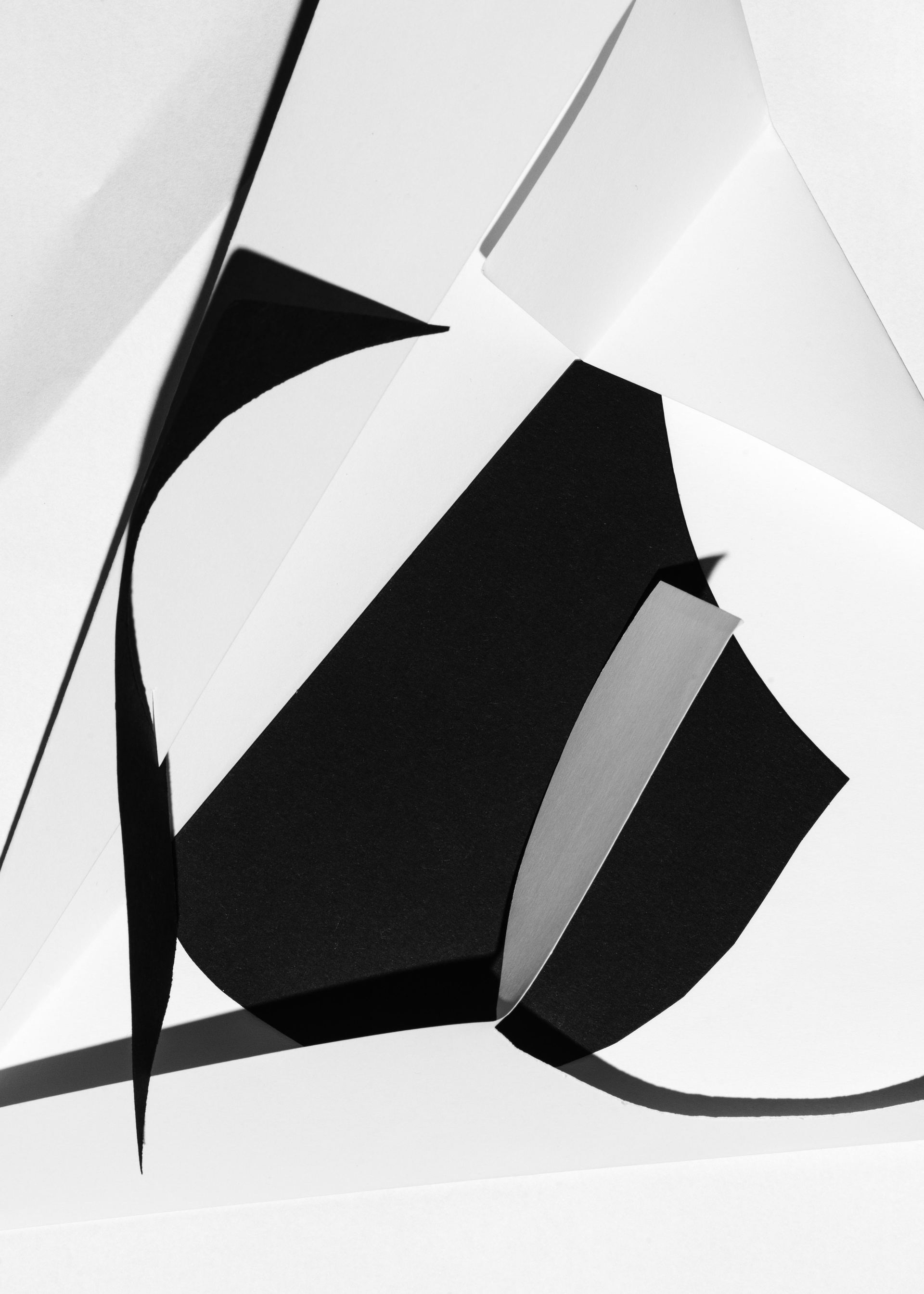
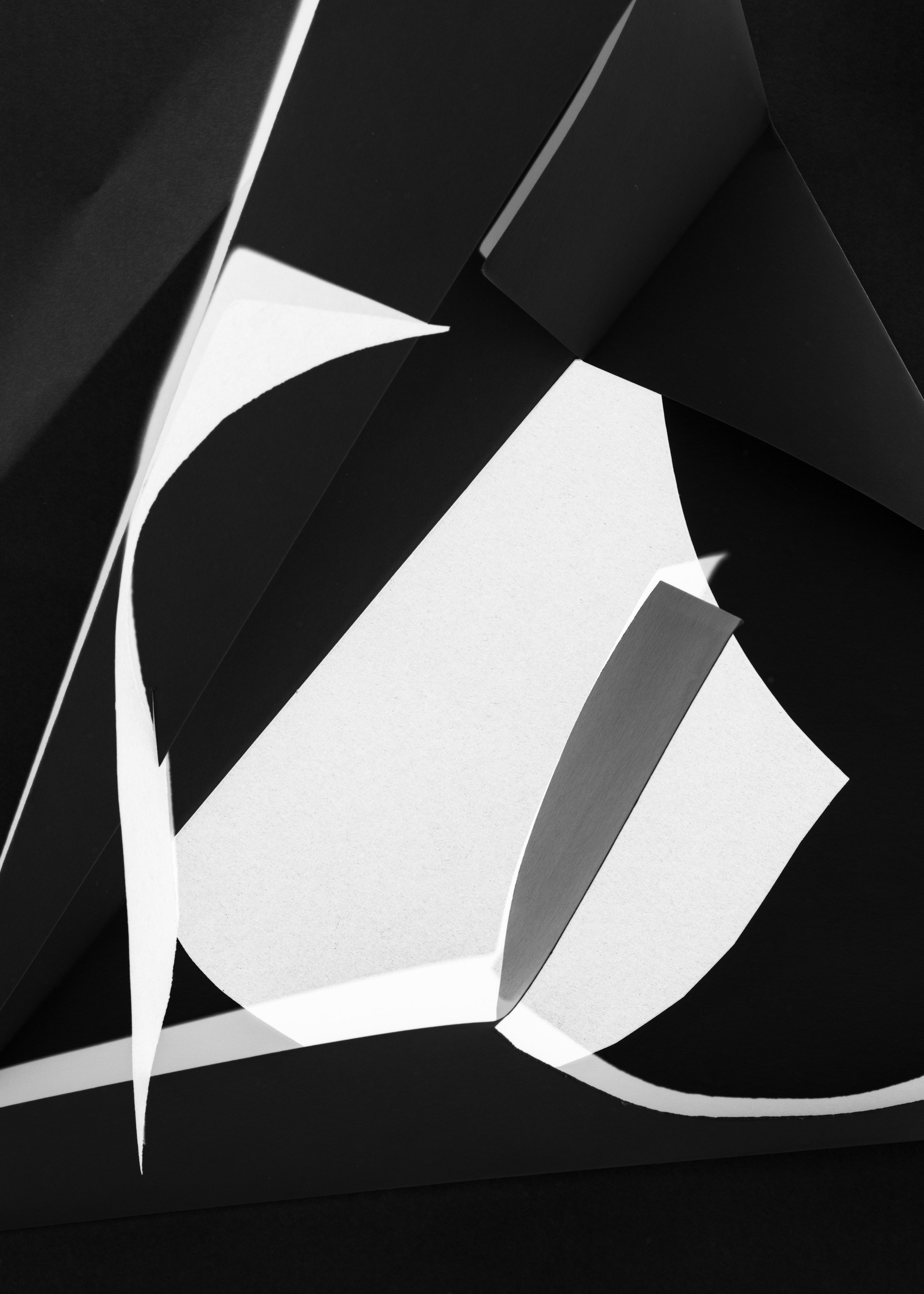
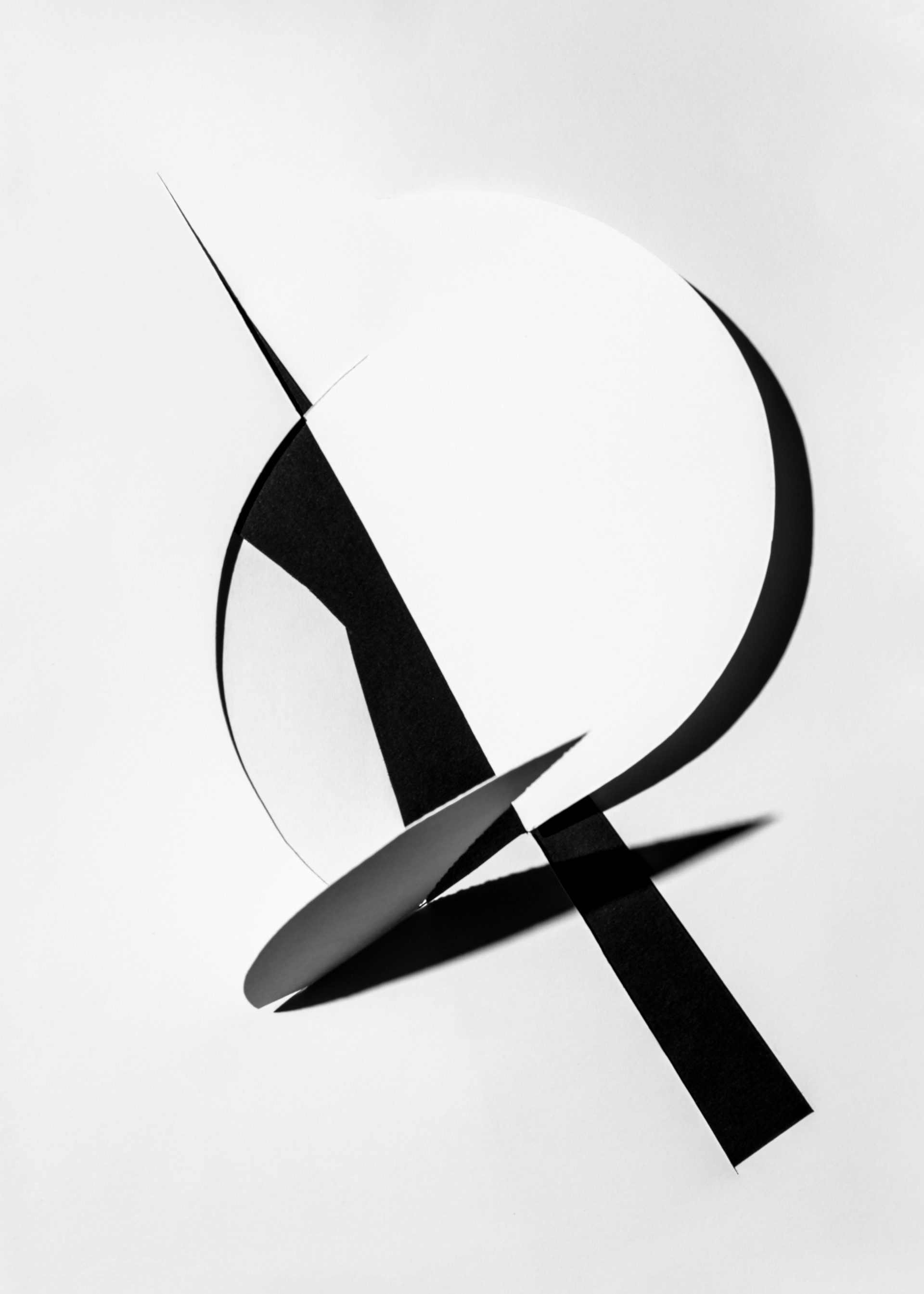
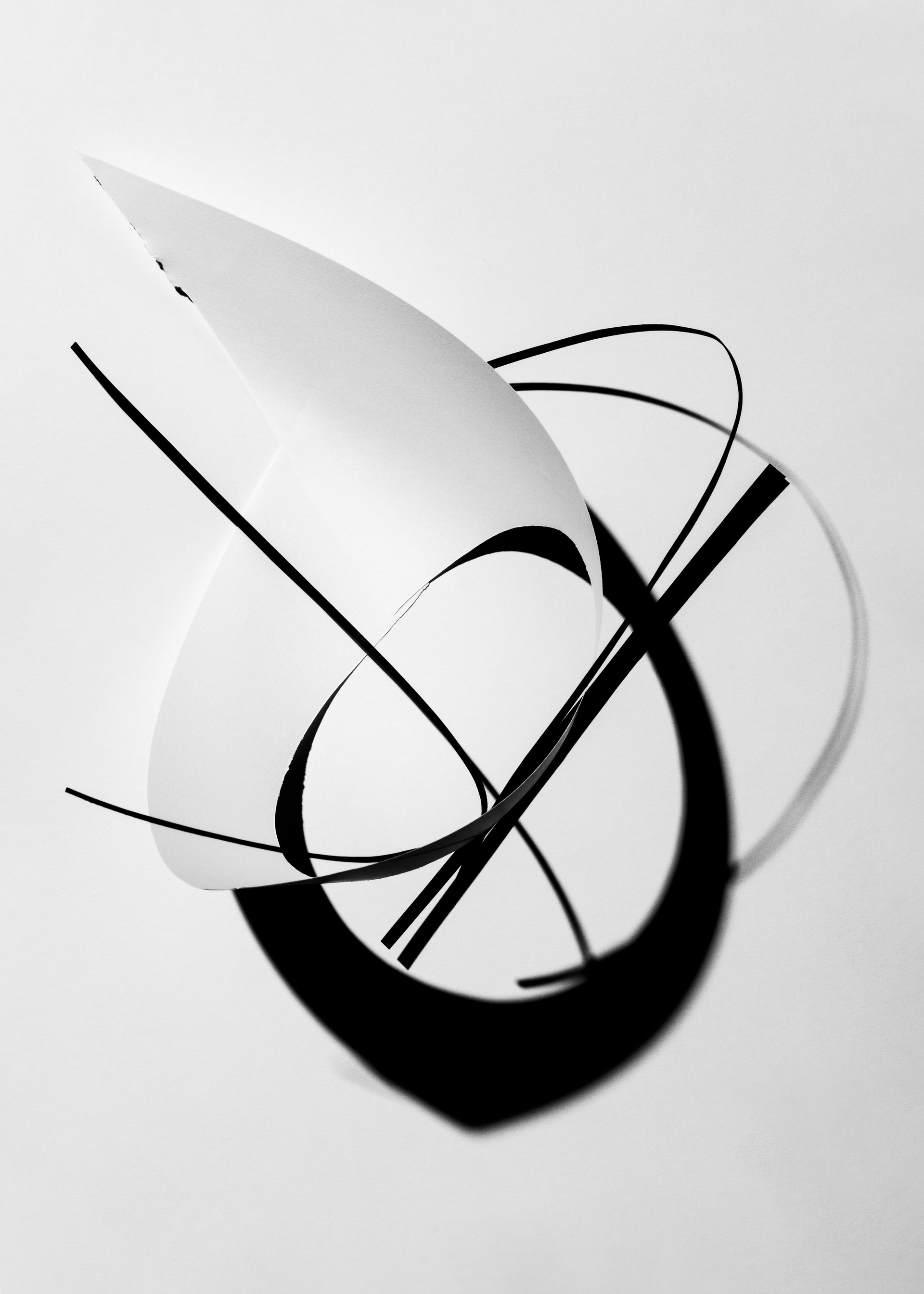
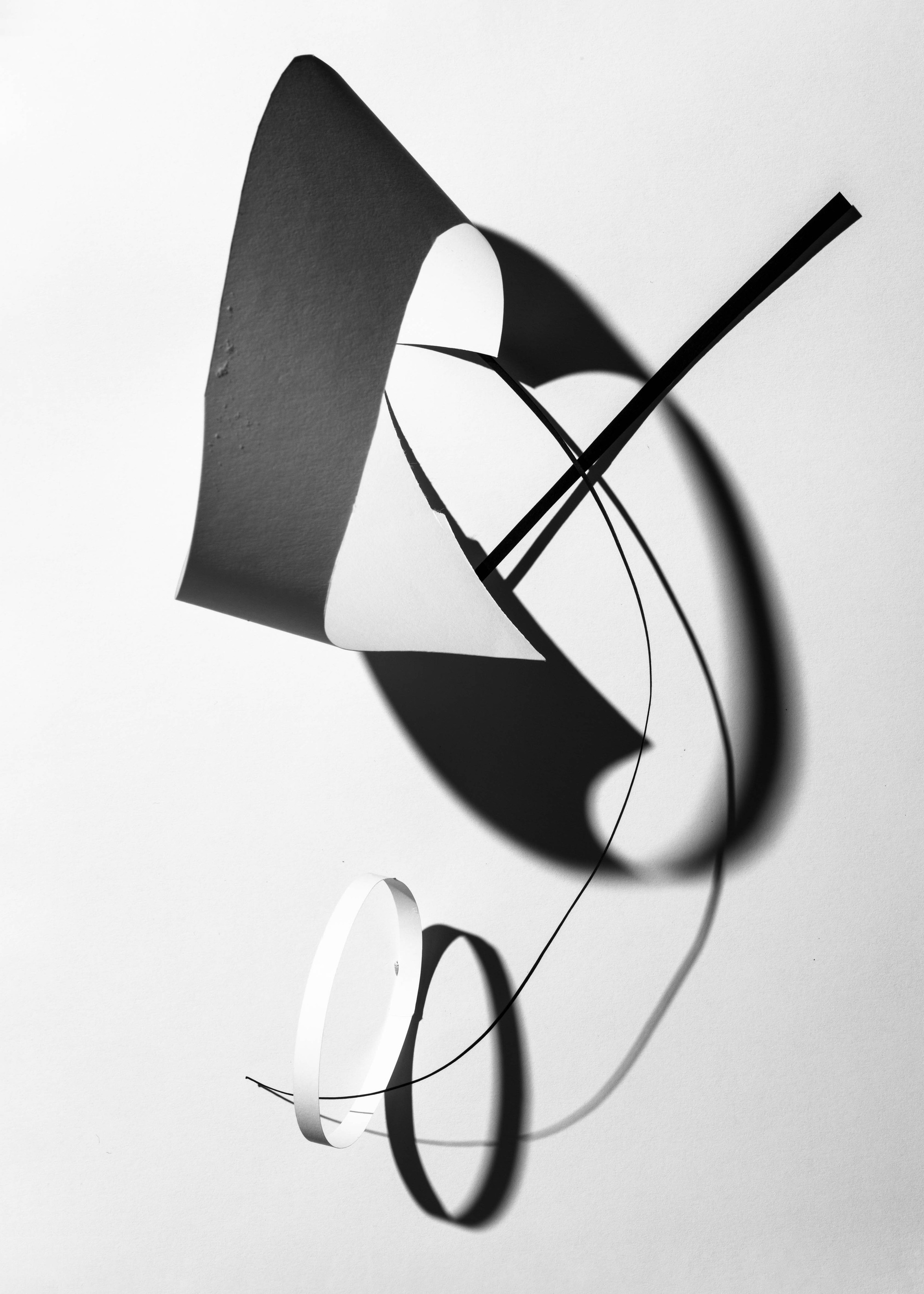
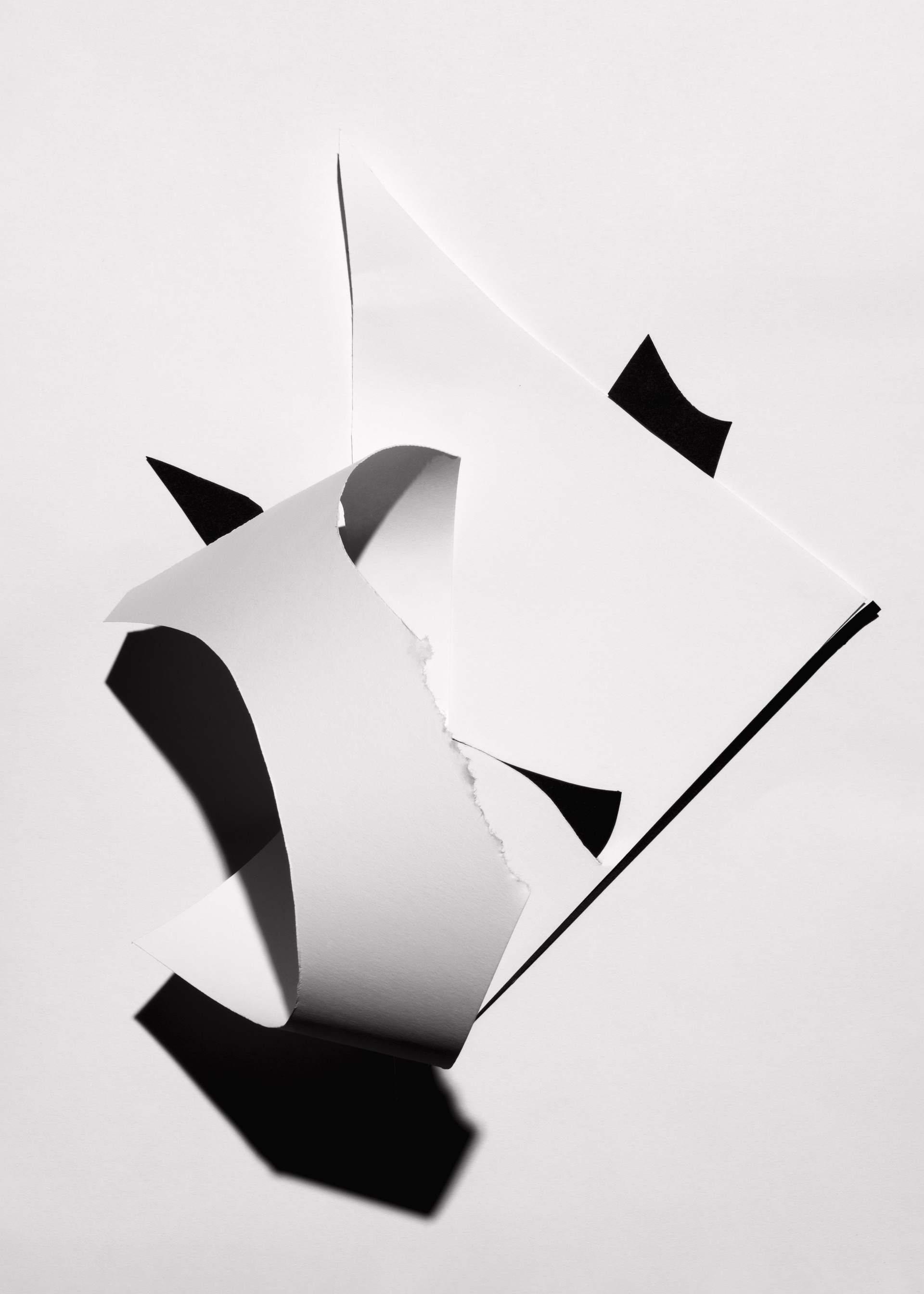
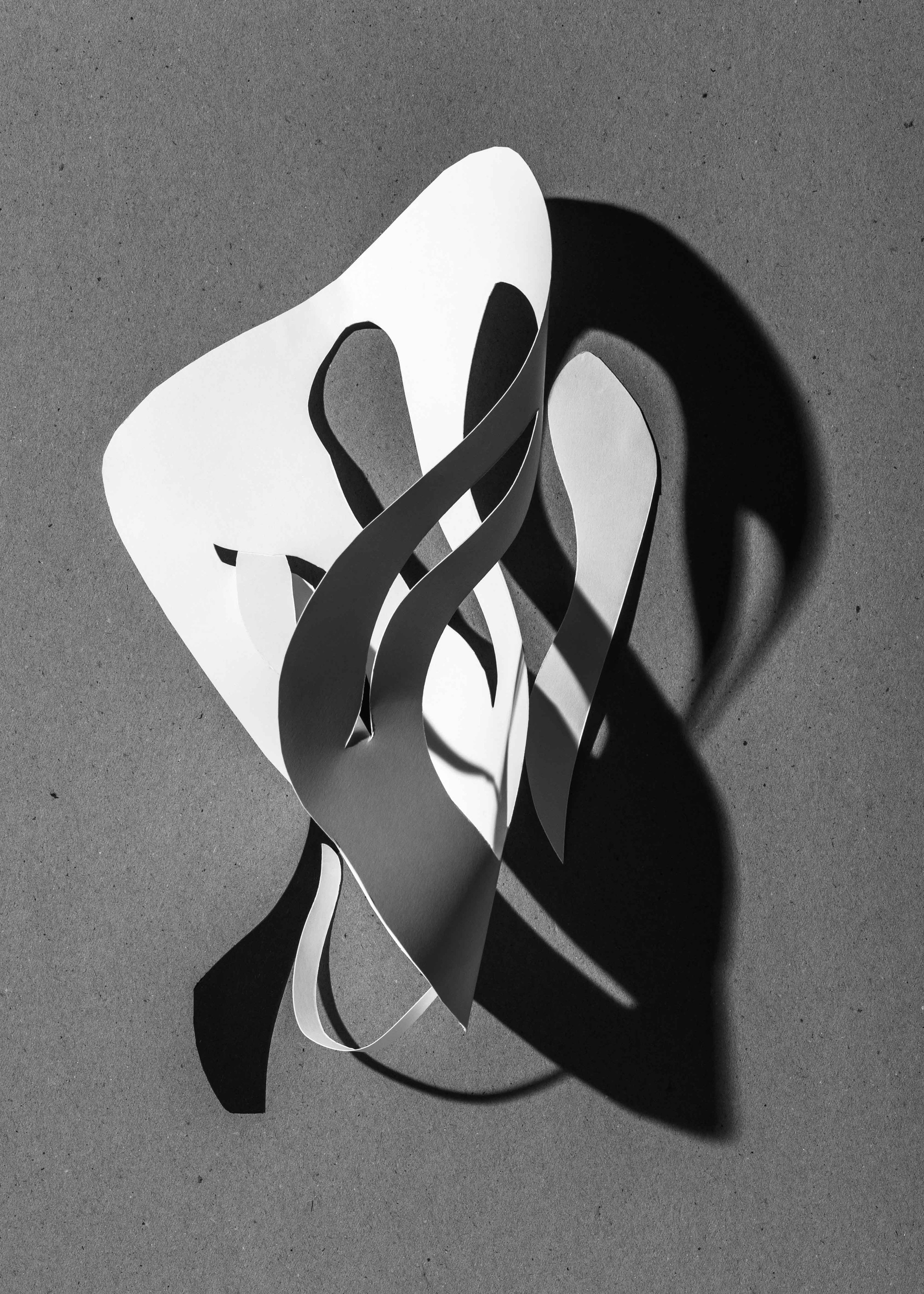
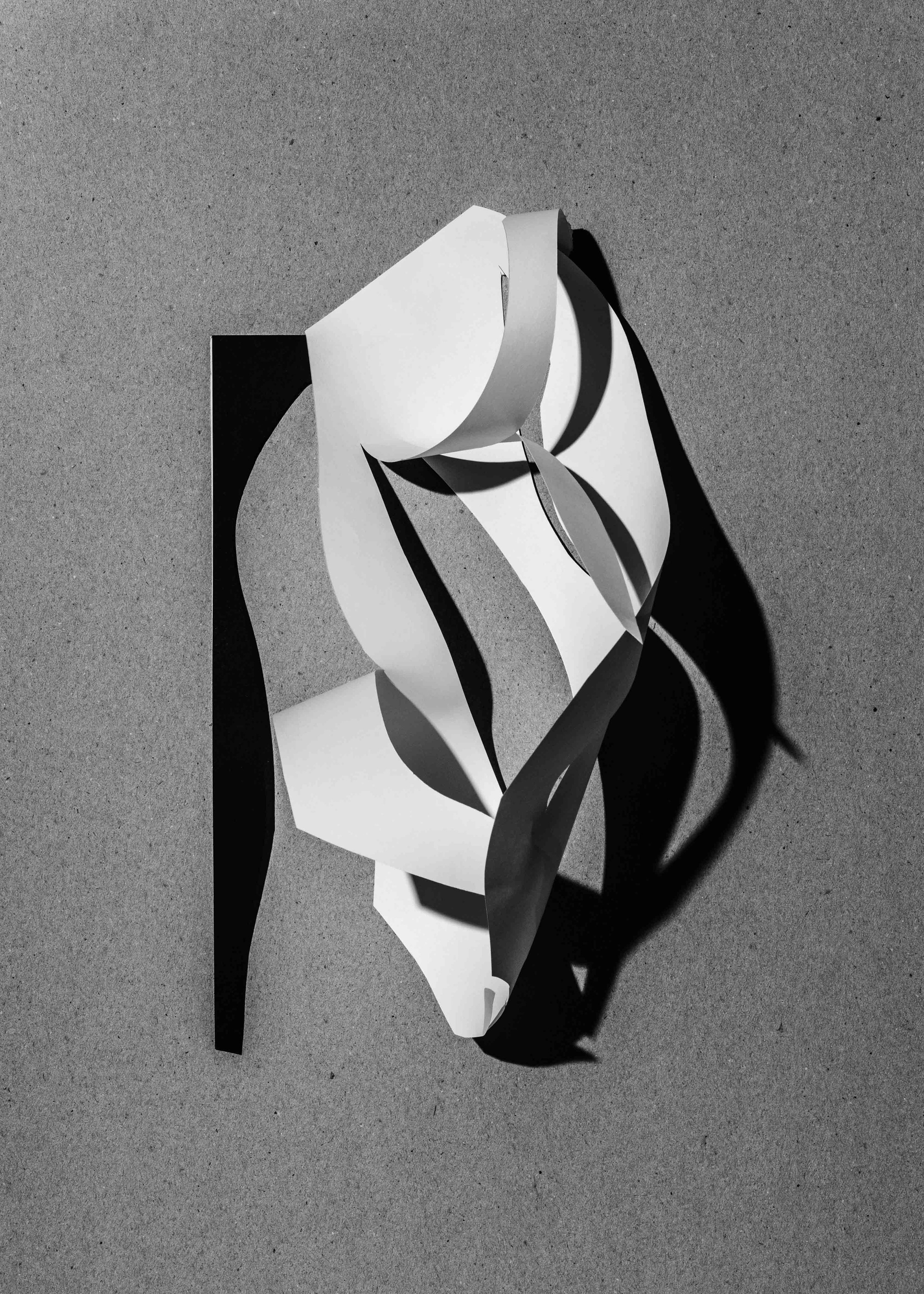
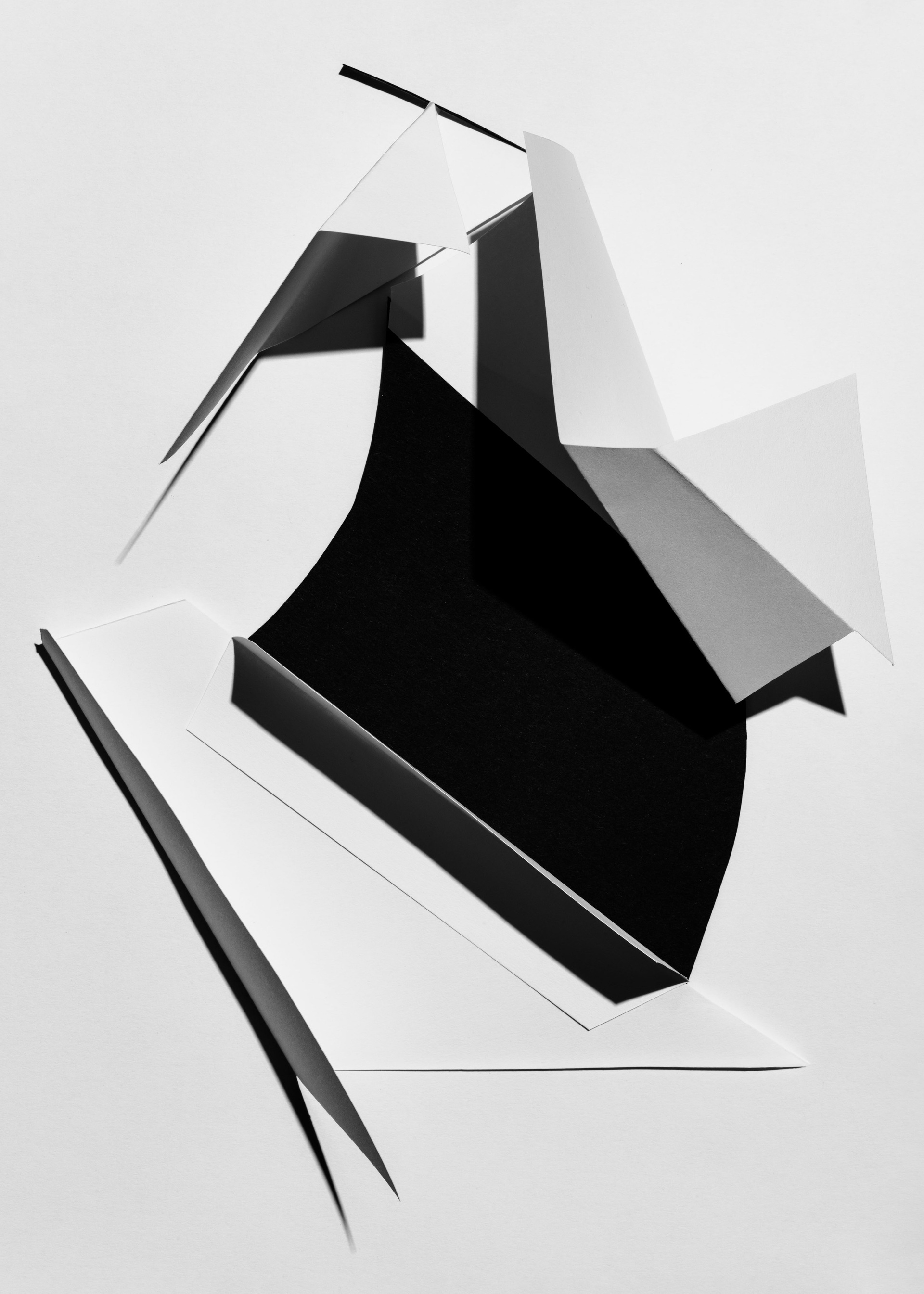
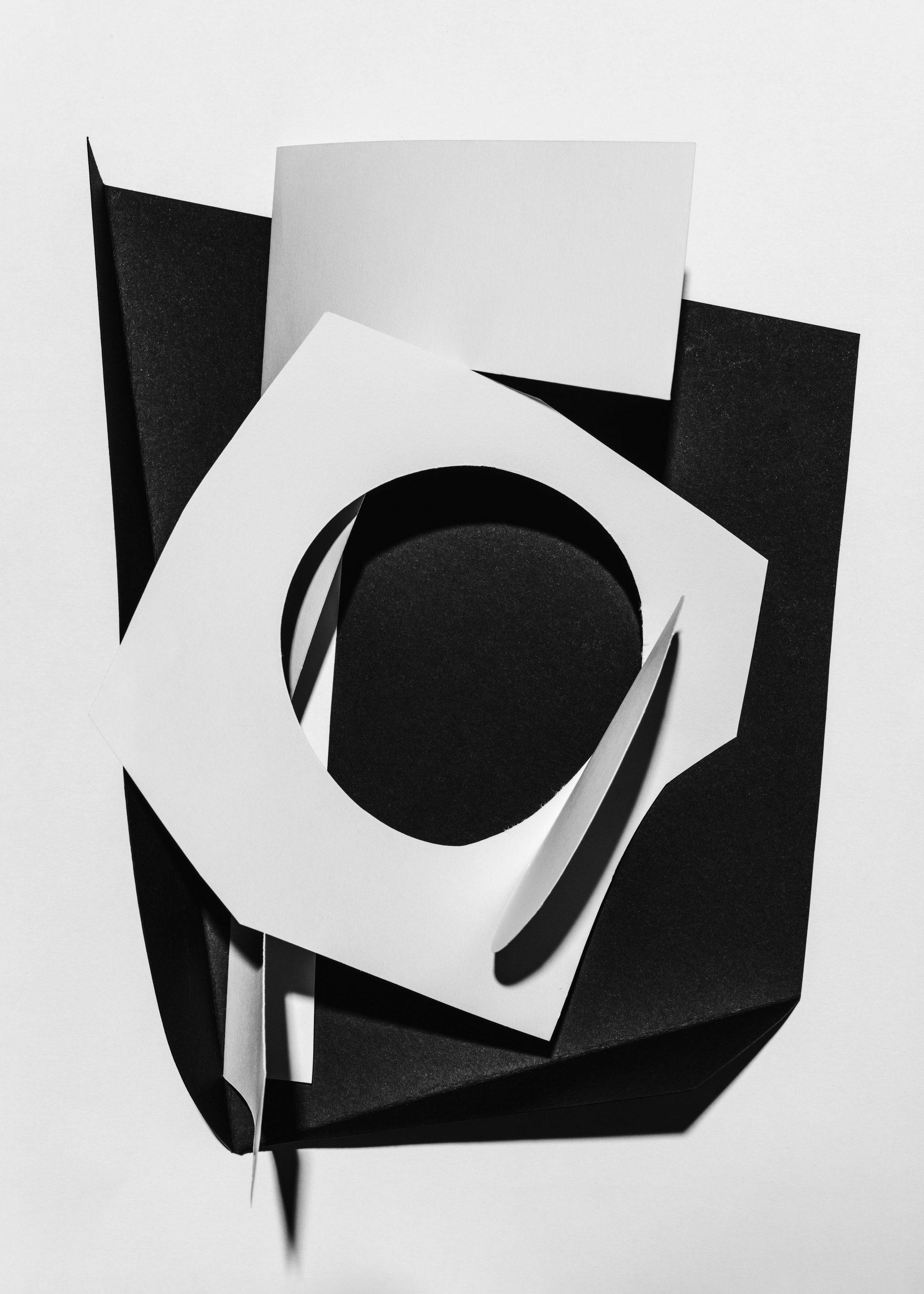
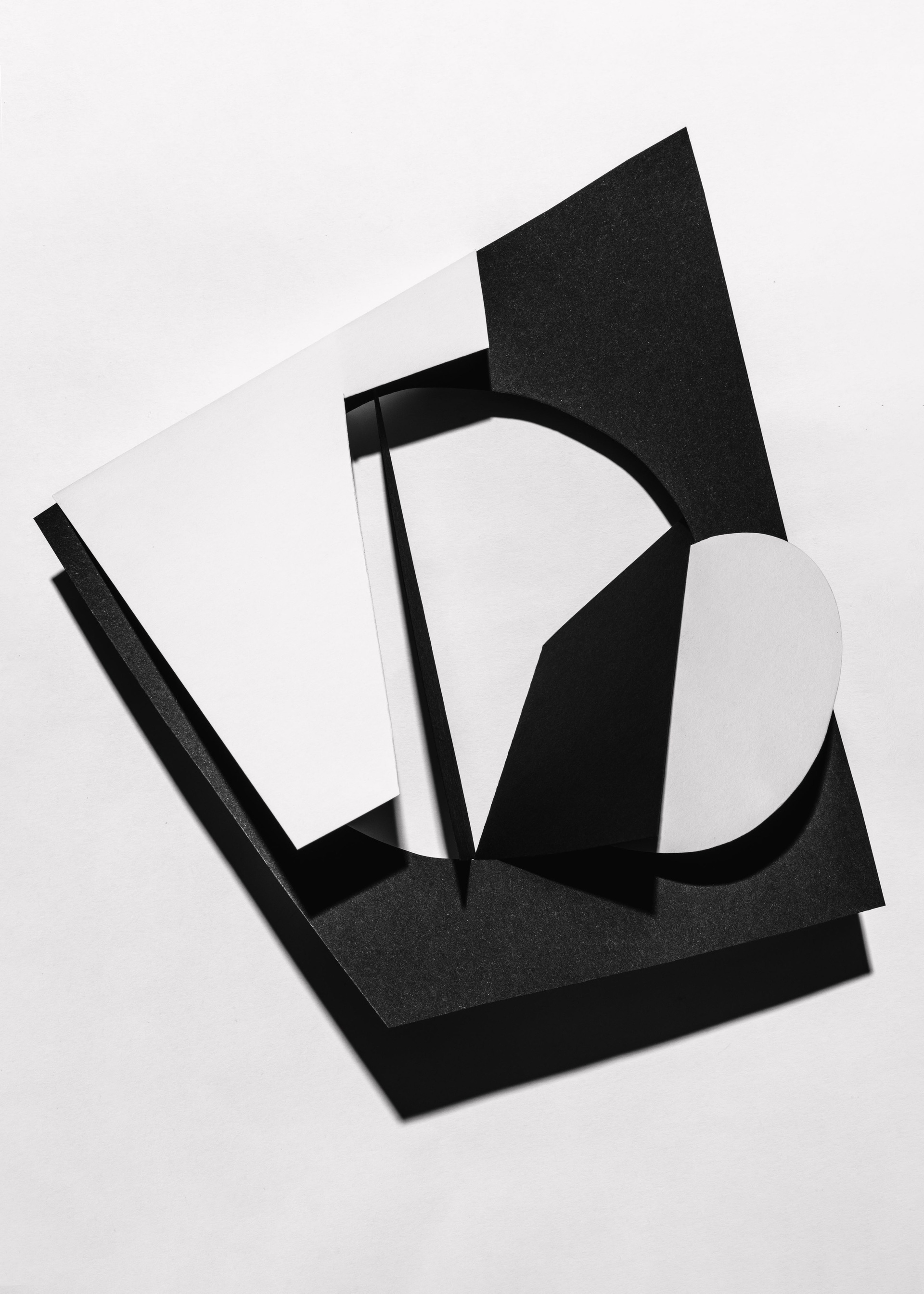
This idea is explored through temporary sculptural forms made from paper and translated through photography. I construct the forms intuitively, bending, folding, compressing and reshaping the material in response to its resistance and fragility. The process is physical and uncertain: each intervention alters the structure, while traces of previous states remain.
Paper allows transformation to happen visibly. It can be fragile yet resistant, hold pressure yet change under touch. Its creases, folds and distortions record decisions and interventions. I am not using paper to represent transformation; I am working through transformation itself.
The sculptures exist only temporarily. Photography becomes the point at which they are reconfigured into something else, as light, shadow and form create a new visual space. Working in black and white introduces another tension between opposition and ambiguity: what appears divided into two extremes contains a range of possibilities between them.
What It Takes considers adaptation not as choosing between one thing and another, but as the possibility of holding both.